Steel, Scale, and Supply Chain Trust: Tradesman Manufacturing
The Challenge
Twenty-twenty-one was the year HVAC dealers learned to be afraid.
The supply chain had fractured. Container ships sat in harbours. Steel prices doubled overnight. Lead times went from two weeks to six months. Contractors couldn’t finish jobs because they couldn’t get basic components. Ductwork. Elbows. Furnace stands.
For wholesalers, the question wasn’t “who has the best price?” It was “who has anything?”
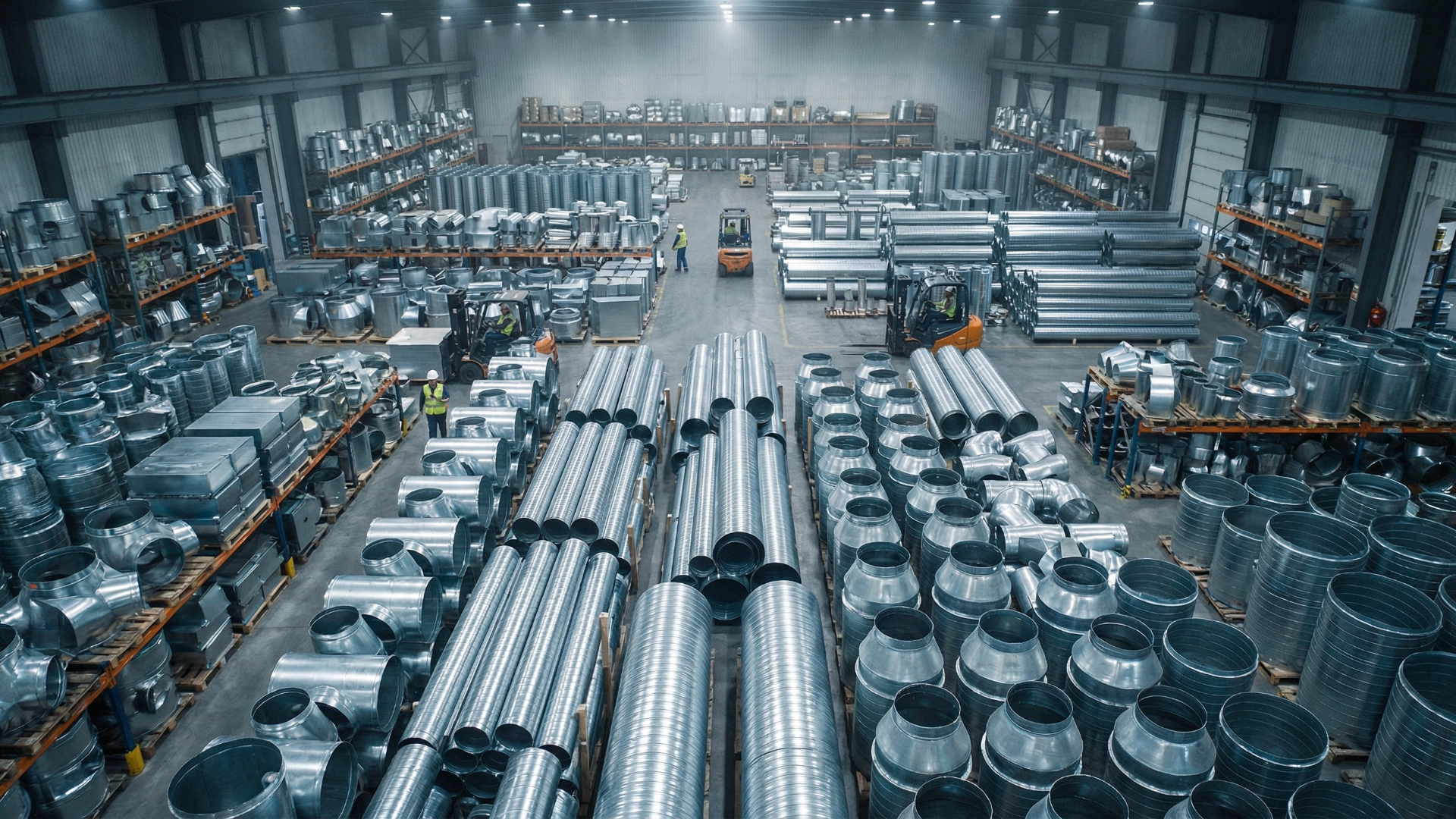
Tradesman Manufacturing had something. One hundred and twenty thousand square feet of inventory in Lethbridge, Alberta. A family-owned HVAC manufacturer that had been preparing for exactly this moment since 1986.
But inventory sitting in a warehouse doesn’t help if no one knows it’s there.
Tradesman’s dealers were scattered across Western Canada and the northwestern United States. They couldn’t fly to Lethbridge to tour the facility. They couldn’t see the racks of galvanised steel stacked floor to ceiling. All they had were phone calls and spec sheets — and in a market flooded with unreliable suppliers making promises they couldn’t keep, that wasn’t enough.
Tradesman needed to prove — visually, viscerally — that they were the stable partner in an unstable market. They needed a virtual facility tour that would make a dealer in Seattle feel like they’d walked the floor in Lethbridge.
The Solution
We built a manifesto, not a commercial.
The script opened with an admission, not a boast: “We’re not immune, but we’ve prepared for the worst.”
That line mattered. It acknowledged the crisis without flinching. It said: we see what you’re going through, and here’s why we’re different.
Then we showed them.
Making 120,000 Square Feet Feel Real
You can say “120,000 square feet” in a brochure. It’s just a number. We needed to make it feel massive.
We deployed drones inside the facility. Low, sweeping passes over the production floor. High, wide shots that showed the full depth of the warehouse — row after row of inventory, racks stretching to the ceiling. A dealer who couldn’t get on a plane could still get the bird’s-eye view. They could see the volume. The preparedness. The proof that Tradesman wasn’t running lean and hoping. They were stocked and ready.
Lighting Reflective Metal
Galvanised steel is a nightmare to film. It’s a mirror. Point a light at it and you get a blinding hot spot. The rest goes dark.
We lit the environment, not the product — large diffusion frames creating a broad, soft source the steel could reflect evenly. We used negative fill to define edges, which was critical for showcasing Tradesman’s “safety edge” — the hemmed edge that eliminates sharp metal and prevents installer injuries.
The result: the metal looked like what it is. North American steel. Premium. Safe. Built right.
The Integrity Narrative
“Crafting HVAC Products with Integrity” was the title. But integrity has two meanings.
Structural integrity: the strength of the welds, the air-tightness of the seals, the durability of the crimps. Moral integrity: the honesty of a family-owned business that does what it says.
We wove them together visually. A close-up of a perfect weld paired with a voiceover about “doing what we promise.” Workers carefully packaging products to reduce shipping damage alongside messaging about reliability. The word did double duty. And so did the video.
Real People, Not Actors
Every person on screen was a Tradesman employee. The welder. The crane operator. The customer service rep on the phone.
That authenticity matters in B2B. Dealers aren’t buying from a logo. They’re buying from people. Showing the real team — diverse, focused, skilled — built trust in a way a polished commercial never could.
The Result
The video became Tradesman’s answer to the question every dealer was asking: “Can you actually deliver?”
It anchored the homepage and lived in the dealer portal. The sales team started sending it in cold outreach emails with a simple pitch: “I know you’re worried about backorders. Watch this two-minute video to see how we stock our facility.”
That link replaced the need for a site visit in the early stages of the sales process. It compressed geography. A prospect in Texas could tour the Lethbridge plant without leaving their desk.
Dealers mentioned specific details — the safety edges, the inventory levels, the fact that they could see the operation running. One distributor told the sales team: “We showed this to our purchasing manager. He was impressed by the scale. We didn’t realise you were that big.”
“We didn’t realise.” That’s the line that mattered. Tradesman had always been prepared. They’d always had the inventory, the process, the people. Until the video, that capacity was locked inside a building in Lethbridge. The video opened the doors.
The sales cycle shortened. Prospects who watched the video came to the first call already convinced of Tradesman’s capacity. The conversation shifted from “Can you handle our volume?” to “Let’s talk terms.”
Internally, it changed the culture too. Employees saw their work framed as craftsmanship, not just manufacturing. HR reported that job candidates mentioned the video in interviews, citing the clean, organised work environment as a reason they wanted to join.
In industrial marketing, the product isn’t just the duct or the elbow. The product is the promise. And in a crisis, the only way to sell a promise is to show the capacity to keep it.
One hundred and twenty thousand square feet. Racks of steel. Machines running. People working. That’s not a commercial. That’s a commitment.
Project Details
- Client
- Tradesman Manufacturing
- Date
- October 2023
- Director
- Michael Warf